See exactly who the work is waiting on.
Every task carries a visible approval chain. Deadlines are set when work is handed over — and when something slips, you see where the days went.
Free while in development. No card, no sales call.
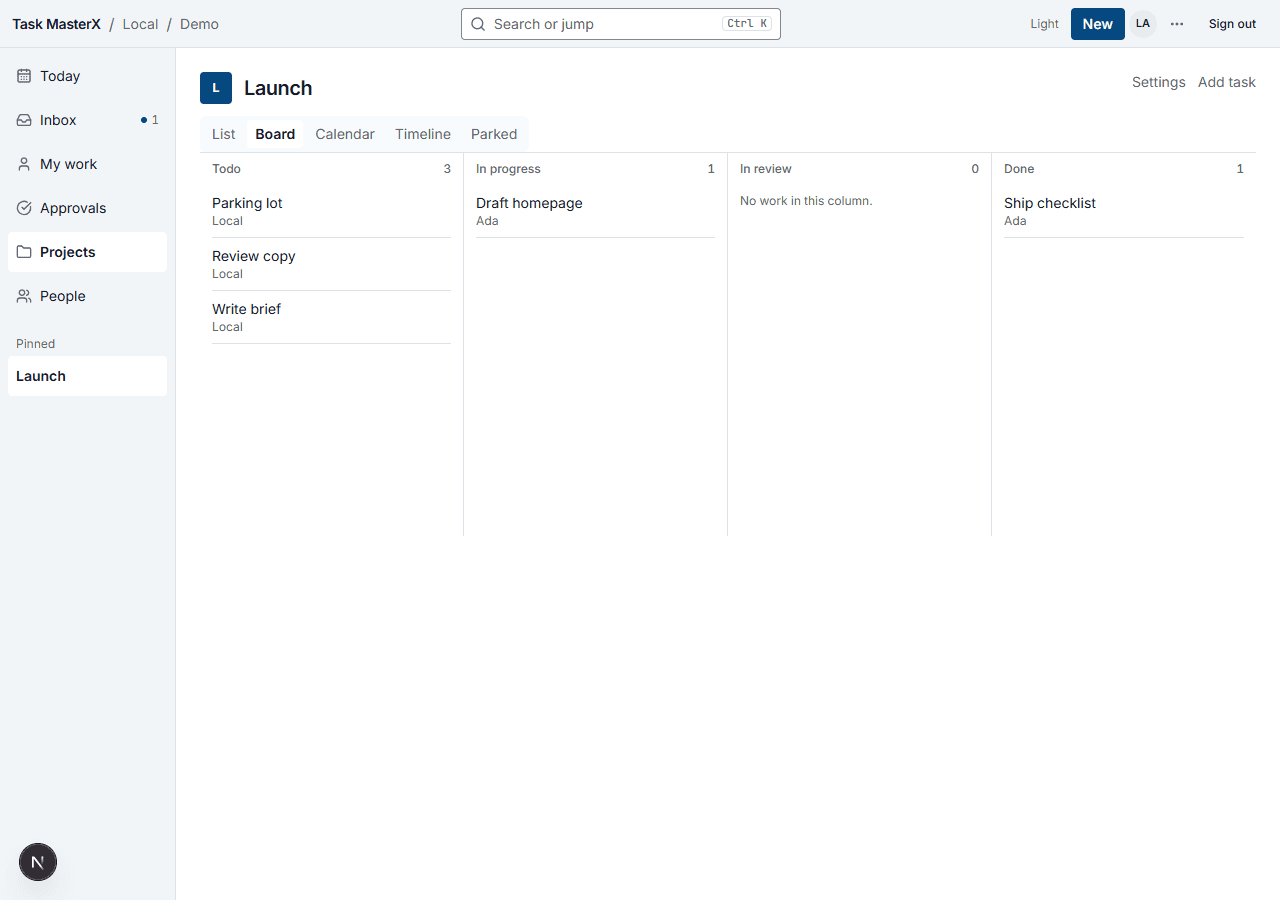
It knows why work is late.
Other tools turn overdue tasks red. Task MasterX says where the days went — diagnosis, not blame — so a manager can act on the bottleneck instead of guessing.
Late by 5 days — 3 waiting on approval, 1 parked, 1 with you.
Parked and blocked time leave the Marks clock. Scoring is opt-in per organization, so a team can earn Marks without inventing a scoreboard culture.
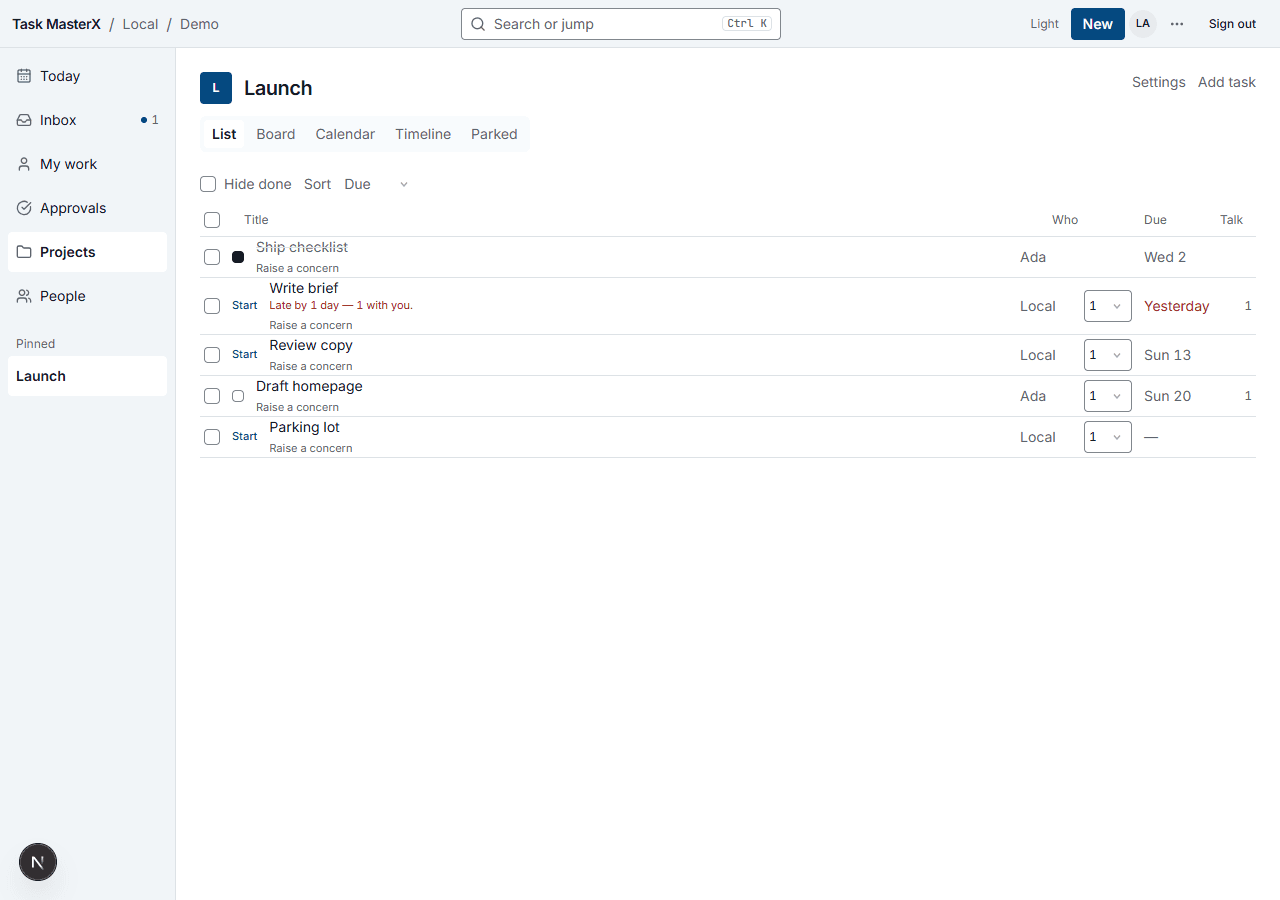
Done means the approval chain closed, not that someone ticked a box.
A task finishes when every stage signs off. Send it back and you write a reason — the round resets, and the count of rounds becomes the quality signal.
Three stages. Waiting on the second.
Two stages, both closed. This one is genuinely done.
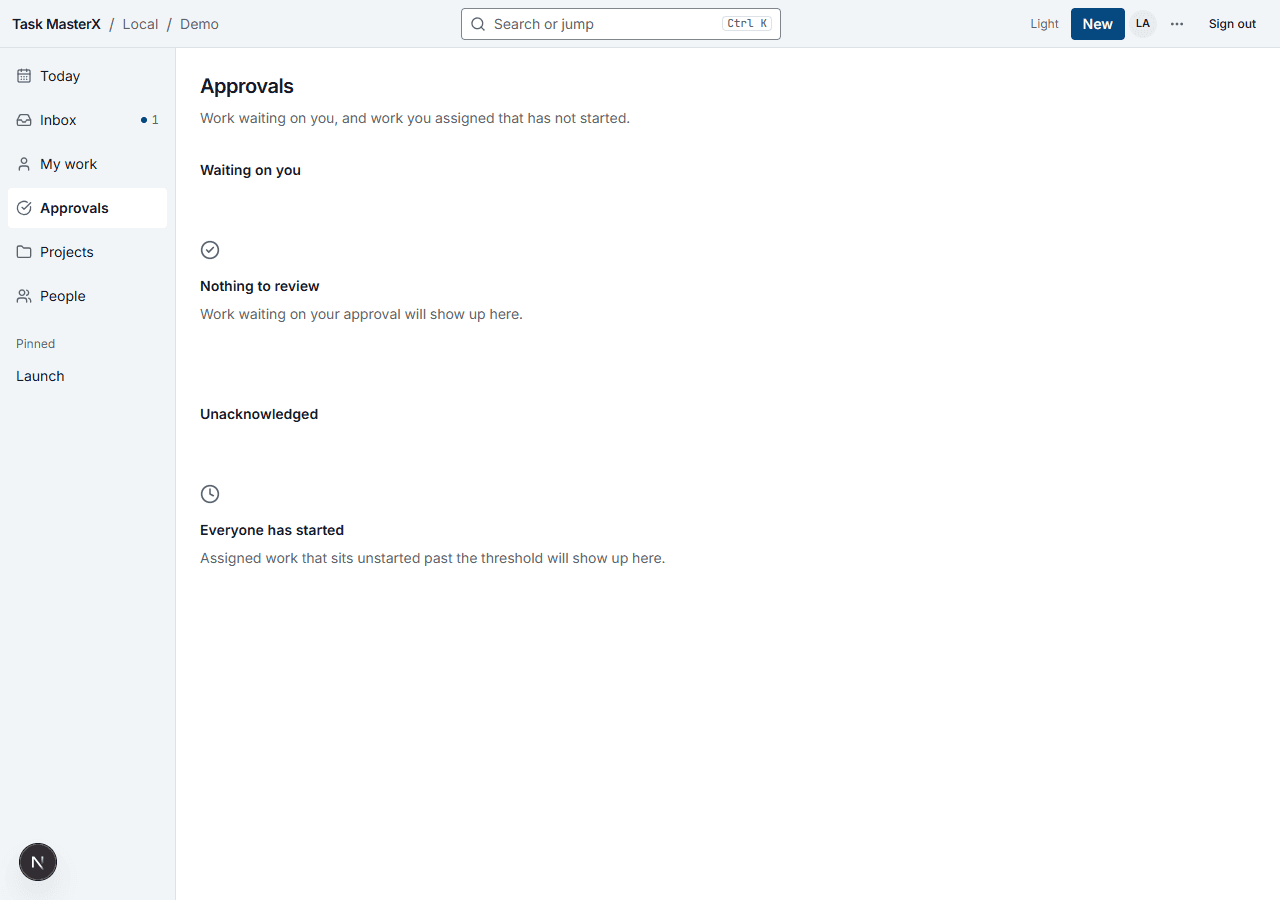
The deadline is set when the work is handed over.
Assigning a task requires a date. From that moment it is yours — whether or not you have opened it. Start is a signal that work began; it is never a gate you can decline.
Nothing waits unseen
Work assigned and never acknowledged surfaces to whoever assigned it — so a stalled task is found before its due date, not after.
Blocked work stops costing you
Waiting on someone outside the team? Park it with a reason. The clock stops, and restarting needs a new date somebody owns.
Say why, on the record
Concerns, rejections and parking all require a written reason on the task. The argument about what happened already has the answer in it.
Built for teams tired of asking where things are.
Task MasterX is in active development and free to use while it is. If this is how your team already thinks about accountability, we would like you on it early.
Create account